

Mass tort attorney marketing isn’t your typical legal marketing game.
With higher stakes, bigger budgets, and more complex cases, it requires a completely different approach than marketing for regular law firm services.
Whether you’re just starting to explore mass torts or looking to improve your existing campaigns, this guide breaks down exactly what you need to know.
We’ll cover what makes mass tort marketing unique, proven strategies that actually work in 2025, and a practical step-by-step plan you can implement right away.
No fluff, no oversold promises—just actionable insights based on real market data and experience.
What Makes Mass Tort Marketing Different?
Mass tort marketing is far more specialized, expensive, and competitive than general law firm marketing.
While most law firms can use broad-based advertising to attract personal injury or family law clients, mass tort firms must target highly specific claimants—those affected by a particular product, drug, or exposure.
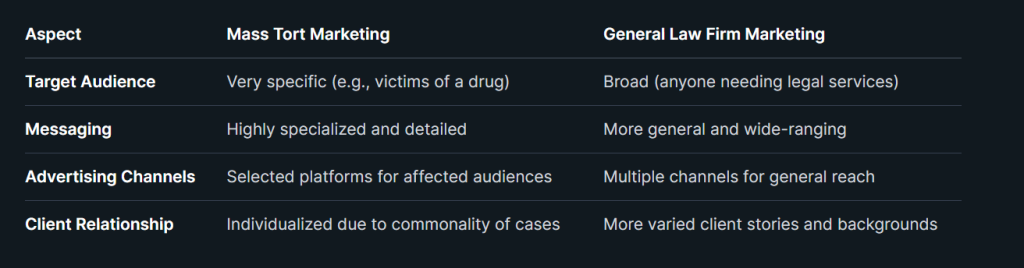
This level of targeting comes at a cost.
Mass tort lead acquisition is expensive, with costs often running into thousands per qualified lead, especially in heavily marketed cases. High competition and strict case requirements make paid advertising and lead generation both costly and complex.
More importantly, not every lead is a case.
Claimants must meet clear legal criteria—medical diagnoses, product use history, and exposure timelines. Without strong intake screening, marketing dollars go to waste.
Regulatory hurdles add another layer.
State bar compliance rules restrict legal advertising, limiting how firms can reach potential claimants. And even when the right audience is reached, skepticism is high—many don’t realize they have a case or hesitate to trust mass tort marketing.
But firms that approach mass tort marketing strategically, can win big:
- Early entry into emerging litigation = lower lead costs, less competition.
- Advanced targeting = better lead quality, optimized spend.
- Streamlined intake & lead nurturing = higher conversion rates, increased ROI.
The firms that invest in precision marketing, strong qualification processes, and smart data-driven strategies will stay ahead—securing more qualified cases without draining their budgets.
Top Lead Generation Strategies for Mass Tort Cases
Now that you understand what makes mass tort marketing different, let’s look at strategies that actually work in 2025.
These aren’t theories—they’re proven tactics that successful mass tort firms use right now to get qualified cases.
Content Marketing
Content marketing attracts highly qualified claimants—without massive ad spend.When done right, content marketing builds trust, educates potential clients, and drives them to take action.
Most people affected by mass torts search online for answers before realizing they have a legal case. If your firm provides helpful, easy-to-understand content, you can reach these potential plaintiffs first—before they end up with a competitor.
Successful content marketing aligns with what mass tort claimants are searching for. For example, Camp Lejeune litigation firms attracted thousands of leads by publishing:
✔ Who qualifies for compensation
✔ Health conditions linked to toxic water exposure
✔ Filing deadlines and next steps
These types of posts not only drive traffic but also convert clients—especially when combined with strong CTAs like “Check if you qualify in 60 seconds.”
What Content Converts Best?
- Client FAQs: Address concerns like “Do I need medical records?” or “How much will I owe?”
- Case Updates: When lawsuits move forward, potential claimants feel urgency to act.
- Short videos: Explain lawsuits in simple, conversational language to overcome skepticism.
- Step-by-step guides: Show exactly what claimants need to do to file.
A strong content marketing strategy delivers pre-qualified leads who are ready to act—without the massive costs of paid ads.
PPC and Paid Social Advertising
Paid advertising is essential for mass tort case acquisition, offering immediate scalability and precise targeting. While costs range from $500-$3,000+ per lead, strategic campaigns can deliver consistent ROI.
Google Ads Success Formula:
An effective mass tort Google Ad looks like this:
The “Google Screened” badge adds credibility—showing potential clients you’ve passed background, license, and insurance checks. This often increases click-through rates by 25-35% and improves lead quality.
Social Platform Selection:
- Facebook/Instagram: Best for mass torts affecting broad demographics. Advanced targeting options let you reach people based on medical conditions, age groups, and life events.
- LinkedIn: Effective for occupational exposure cases. Target specific industries, job titles, and professional backgrounds.
- YouTube: Ideal for educational content about mass torts. Pre-roll ads can capture attention with compelling case information.
- TikTok: Emerging platform for reaching younger demographics, especially useful for product liability cases affecting younger populations.
For all platforms, retargeting is crucial—most mass tort clients need 7-10 touchpoints before converting.
Set up pixels correctly and create custom audiences based on website visitors.
Your landing pages matter as much as your ads. Each mass tort needs a dedicated page with:
- Clear qualification criteria
- Simple intake forms (5 fields maximum)
- Strong trust signals (results, testimonials where allowed)
- Mobile-first design
Track your cost per qualified lead, not just cost per click. The most expensive clicks often bring the best cases.
Lead Generation Platforms
Mass tort lead generation platforms are third-party services that connect law firms with potential claimants. While they can be expensive, these platforms often provide a steady stream of pre-qualified leads—saving firms significant time on initial screening.
Understanding the landscape of lead generation platforms is crucial before investing. Each platform offers different levels of lead qualification, pricing structures, and specializations. Here’s a breakdown of the major players and what they offer:
| Platform | Specialization | Cost Range | Lead Quality |
|---|---|---|---|
| Case Works | Pre-qualified mass tort leads | $500-1000+ | Fully screened with medical records |
| Alert Communications | 24/7 intake and screening | $200-500 | Basic qualification |
| CAMG | Mass tort-specific marketing | $600-1200+ | Varies by campaign |
| LegalActive | Real-time delivery | $300-800 | Mixed quality, quick delivery |
Success with lead generation platforms requires a strategic approach. Start with small test campaigns—investing $5-10K is enough to evaluate platform performance.
Your internal processes matter as much as the platform you choose. You need a strong intake team ready to contact leads quickly, as these prospects often reach out to multiple firms.
Key factors for success:
- Track conversion rates meticulously
- Calculate true cost per signed case
- Follow up within 5 minutes of lead delivery
- Have clear qualification criteria
Most successful firms use lead generation platforms as part of a broader marketing strategy, not as their sole source of cases. This balanced approach helps maintain a steady case flow while managing costs
Email Marketing
Email marketing plays a unique role in mass tort case acquisition. Unlike other marketing channels that focus on initial lead generation, email excels at nurturing potential claimants through the decision process and keeping signed clients informed about their cases.
The key to effective mass tort email marketing lies in segmentation. You’ll typically work with three main audiences:
- Potential claimants still evaluating their options
- Leads who’ve shown interest but haven’t signed
- Current clients needing case updates
A strategic email sequence might look like this:
Mass Tort Email Sequence Blueprint
Initial Contact → Qualification → Success Stories → Deadline → Follow-upManaging email campaigns for mass torts can be complex and time-consuming. This is where automation becomes crucial. With proper automation, your firm can maintain consistent communication with hundreds or thousands of potential claimants while ensuring each receives personalized, relevant information.
Smart Automation Strategies:
Your email system should automatically respond to specific client actions. Key trigger points include:
- Website form completion
- Document download
- Case criteria quiz completion
- Initial consultation scheduling
Each of these actions indicates different levels of interest and intent. Your automated response should match that intent with relevant information and clear next steps.
Essential Compliance Elements:
Mass tort email marketing must balance effectiveness with ethical compliance. Every email in your sequence needs:
- Clear opt-out mechanism
- Physical office address
- Proper disclaimers per state bar rules
- Transparent subject lines (no misleading claims)
Remember: While automation makes email marketing scalable, the goal is to facilitate—not replace—personal connection. Use email to streamline communication and nurture leads, but maintain the human element in your client relationships.
Integrating Traditional Marketing with Digital Strategies
Traditional marketing remains effective for mass tort case acquisition—especially when strategically combined with digital efforts. TV, radio, and print still reach demographics that might miss digital advertising entirely.
TV Advertising Integration:
TV ads drive digital engagement. Include:
- Simple, memorable URLs
- QR codes for instant website access
- Text-to-claim options
- 24/7 phone numbers
Multi-Channel Integration Example:
TV Ad → Custom Landing Page → Email Nurture → Phone Follow-up Track calls and web visits during and after TV spots to measure true ROIRadio + Digital Amplification:
Radio builds awareness efficiently in specific markets. Maximize impact by:
- Running ads during peak driving hours
- Creating dedicated landing pages for radio traffic
- Using unique tracking numbers
- Following up with targeted digital ads in the same geographic area
Print Media Strategy:
While print readership has declined, certain demographics still rely heavily on newspapers and magazines. Make print work harder by:
- Including QR codes linking to case-specific landing pages
- Targeting local publications in affected areas
- Running ads near relevant news stories
- Using print ads to retarget digital audiences
The key to success? Measure everything.
Track which traditional channels drive the most qualified leads, then adjust your digital follow-up accordingly. A well-integrated campaign will always outperform single-channel efforts.
Your Mass Tort Marketing Action Plan

You now understand the marketing channels available for mass tort acquisition. But knowing your options isn’t enough—you need a systematic approach to implement them effectively.
Here’s your comprehensive roadmap to launching and scaling your mass tort marketing efforts:
Step 1: Define Your Focus & Budget
The biggest mistake law firms make in mass tort marketing? Trying to compete in every available mass tort. This approach spreads resources too thin and often results in poor ROI. Instead, start by choosing specific mass torts where your firm can make a real impact.
Mass Tort Selection Framework
Average Case Value → Competition Level → Filing TimelineYour choice of mass tort should balance potential returns with market competition. Look for torts with higher average case values and manageable competition levels. Consider the litigation timeline too—some mass torts resolve quickly, while others can take years to settle.
Mass tort marketing isn’t a sprint—it’s a marathon requiring sustained investment.
Plan for a minimum 3-6 month runway. Your initial budget needs to cover multiple marketing channels, infrastructure setup, and lead intake costs. Most successful firms start with testing 2-3 mass torts maximum, allowing them to learn what works before scaling up.
Understanding your cost per acquisition targets is crucial for profitability.
For example, if average case values are $50,000, your maximum allowable cost per acquisition might be $3,000-$5,000.
Build your marketing budget backwards from these numbers to ensure profitable case acquisition.
Step 2: Build Your Digital Foundation
Before spending money on advertising, you need a strong digital infrastructure. Think of this as building your house before furnishing it—without a solid foundation, your marketing efforts won’t have anywhere to convert.
At the core of your digital foundation is your website. But this isn’t about having a beautiful design—it’s about conversion efficiency. Your mass tort pages need to turn visitors into leads.
Conversion-Focused Page Elements:
Clear Criteria Simple Forms Multiple Contact Options Fast LoadingCreate dedicated landing pages for each mass tort. Over 60% of potential clients will visit on their phones, so mobile optimization isn’t optional—it’s essential.
Your pages should immediately answer three questions:
- Do I qualify?
- How much compensation might I receive?
- What’s the next step?
Your tracking infrastructure determines how well you can optimize your marketing. Without proper tracking, you’re flying blind. Set up analytics to monitor every marketing channel’s performance. Implement call tracking with recording capabilities for quality control.
Mass Tort CRM Configuration Guide
✓ Medical Record Status ✓ Statute of Limitations ✓ Product Usage Timeline ✓ Lead Source DataRemember: A well-built digital foundation makes every marketing dollar work harder. Take the time to get this right before scaling your marketing spend.
Step 3: Launch Your Marketing Mix
With your digital foundation in place, it’s time to launch your marketing campaigns. The key to success is a balanced, multi-channel approach. This protects you from algorithm changes and market shifts while maximizing your reach.
Strategic Launch Sequence:
Week 1: Start with Google Ads → test different ad formats Week 2: Add Meta Ads → target lookalike audiences Week 3: Introduce content strategy → build authority Week 4: Test lead gen platforms → diversify sourcesStart with a proven budget allocation, but be ready to adjust based on performance.
Understanding proven marketing ideas for law firms will help you test which channels deliver the best-qualified leads for your specific mass tort.
Channel Performance Indicators:
• Cost per qualified lead • Lead-to-client conversion rate • Time to conversion • Lead quality scoreYour launch phase should last about 4-6 weeks. This gives enough time to gather meaningful data while limiting risk. Start with smaller budgets in each channel – you can always scale up what works. Common starting points are $50-100 per day per channel, allowing you to test multiple approaches without overcommitting.
Remember: Different mass torts may perform better on different channels. What works for one tort type might not work for another. Let data guide your decisions, and be prepared to pivot quickly based on results.
Step 4: Monitor & Optimize
Launching your campaigns is just the beginning. The real work starts with monitoring and optimization.
This is where most firms fall short—they launch campaigns but don’t optimize them properly. Understanding the importance of marketing for law firms is crucial for proper optimization and preventing wasted budget.
$X Cost per Qualified Lead 7.5 Lead Quality Score 23% Conversion RateCreate a daily monitoring routine. The most successful mass tort firms check these metrics every morning and make immediate adjustments. This rapid response to data helps maintain efficiency as market conditions change.
Weekly Optimization Checklist
Pay special attention to your qualification process. Not all leads are created equal. Track which channels bring in the highest quality leads—those most likely to convert into signed cases. Sometimes, the most expensive leads actually provide the best ROI because they convert at higher rates.
Set up weekly optimization meetings with your team. Review what’s working and what isn’t. Be prepared to:
- Shift budgets between channels
- Pause underperforming campaigns
- Scale successful approaches
- Test new targeting options
Remember: Optimization is ongoing. Even your best-performing campaigns can improve with constant testing and refinement.
Step 5: Scale What Works
Once you’ve identified winning channels and optimized your campaigns, it’s time to scale. But here’s the crucial part: scaling isn’t just about increasing budgets. It’s about strategic growth that maintains lead quality while increasing volume.
Ready to Scale? Checklist: ✓ Lead quality stable30+ days of consistent quality ✓ Systems optimized
Intake team prepared ✓ ROI confirmed
Profitable acquisition
Before scaling any channel, ensure your infrastructure can handle the volume. This means having:
- Sufficient intake staff
- Automated follow-up systems
- Clear qualification processes
- Document management capabilities
Phase 1 (Week 1-2)
Increase budget 20%
Monitor daily
Phase 2 (Week 3-4)
Expand targeting
Optimize conversion
When scaling, pay attention to warning signs. If lead quality drops or cost per acquisition rises significantly, pause the scaling and reassess. It’s better to grow slowly and maintain quality than to scale quickly and waste resources on poor leads.
Remember: Different channels scale differently. PPC might hit saturation points quickly, while content marketing could scale more gradually but sustainably. Diversify your scaling efforts across multiple successful channels to maintain steady growth.
Best Practices for Marketing Mass Tort Cases

1. Choose the Right Mass Tort Cases to Market
Not all mass torts are worth your marketing budget. The most successful firms carefully select which cases to pursue based on three key factors: settlement potential, competition level, and ease of qualification.
Emerging mass torts often offer better opportunities than established ones. Less competition means lower acquisition costs and higher conversion rates. Study the qualification criteria carefully—some mass torts require extensive medical documentation, while others have simpler proof requirements.
Choose cases where you can efficiently validate claims. A mass tort with a lower case value but easier qualification process might be more profitable than a high-value tort with stringent requirements. Focus on torts where you can build a competitive advantage, either through expertise, resources, or market positioning.
2. Design an Airtight Lead Qualification Process
The difference between profitable and unprofitable mass tort campaigns often comes down to lead qualification. A solid qualification process saves you from wasting resources on non-viable cases.
Your intake team needs clear scripts and decision trees. Document exactly what qualifies or disqualifies a lead at each stage of the process. Set up automated pre-qualification where possible through online eligibility quizzes and initial screening chatbots.
But don’t over-automate. The most successful firms balance automation with human touch. Have experienced intake staff review borderline cases that automation might miss. Create separate qualification workflows for different lead sources—social media leads often need different screening than referral leads.
Remember: Speed matters in lead qualification. The faster you can qualify or disqualify a lead, the more efficient your marketing spend becomes.
3. Track Case Value vs. Marketing Spend
Mass tort marketing success isn’t about lead volume—it’s about case value. Too many firms focus on cost per lead without considering the bigger picture: cost per signed case and potential settlement value.
Track your marketing ROI by mass tort type. Some torts might have higher lead costs but deliver better settlement values. Monitor key metrics like cost per qualified lead, lead-to-client conversion rate, and average case value. This data helps you identify which mass torts deserve more marketing budget.
Don’t just track initial acquisition costs. Factor in all expenses: intake staff, medical record retrieval, expert reviews, and marketing overhead. A complete view of your costs helps make better marketing decisions. Some mass torts might look profitable at first glance but become less attractive when you consider all expenses.
4. Optimize Your Mass Tort Marketing Mix
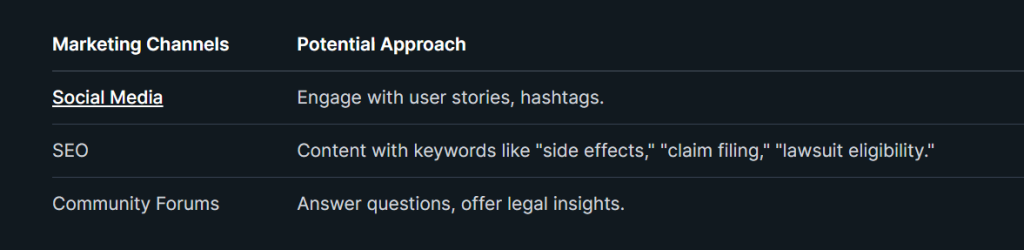
Success in mass tort marketing rarely comes from a single channel.
Different demographics respond to different marketing approaches, and various mass torts require different strategies to reach potential claimants.
Test multiple channels but don’t spread yourself too thin. Start with two or three primary channels and master them before expanding. Pay attention to how different mass torts perform on different platforms. For example, product liability cases might perform well on social media, while medical device cases could see better results through targeted PPC — and malpractice-related litigation benefits from innovative tactics for malpractice practices that build credibility alongside volume.
Most importantly, understand how your channels work together. A potential client might see your TV ad, search online, and finally convert through your website. Track these touch points to understand your true conversion path and allocate your budget accordingly.
5. Partner with Mass Tort Marketing Experts
Mass tort marketing is complex and constantly evolving. What worked six months ago might not work today, and strategies that succeed for one mass tort might fail for another.
The most successful firms recognize when they need expert help.
Marketing agencies specializing in mass torts bring valuable insights: they know which channels are delivering results, understand compliance requirements across jurisdictions, and have tested systems for lead qualification.
They can help you avoid costly mistakes and scale faster.
Most importantly, specialized agencies have data from multiple campaigns across different mass torts. This broad perspective helps optimize your marketing spend and identify opportunities before they become saturated.
While it’s possible to handle mass tort marketing in-house, partnering with experts often delivers better ROI.
Scale Your Mass Tort Practice with Constellation

At Constellation Marketing, we understand the unique challenges of mass tort marketing. Our team specializes in developing targeted strategies that deliver qualified mass tort leads while maintaining compliance and controlling costs.
We help law firms:
- Identify profitable mass tort opportunities
- Build efficient lead generation systems
- Optimize marketing spend across channels
- Scale case acquisition sustainably
Our proven approach combines digital expertise with deep understanding of the legal industry to deliver measurable results for mass tort practices.
Ready to grow your mass tort practice?
Schedule a consultation to discuss your specific needs!
Frequently Asked Questions
Practical answers on lead generation, client qualification, channel strategy, and campaign performance for mass tort law firms.
Mass tort attorney marketing refers to the strategies law firms use to attract and qualify clients involved in large-scale litigation cases such as defective drugs, medical devices, or environmental exposure claims. Unlike general legal marketing, these campaigns focus on reaching specific groups of affected individuals and guiding them through a structured intake and screening process.
Mass tort marketing is different because it targets a narrow and highly specific audience tied to a particular product, medication, or exposure. Campaigns need more precise targeting, stronger educational content, and a reliable intake process to separate qualified claimants from general legal inquiries.
The strongest campaigns usually combine SEO content, paid search, paid social, and lead generation platforms. A multi-channel approach helps law firms reach potential claimants at different stages of awareness and improves the odds of generating qualified case inquiries rather than low-intent traffic.
Qualification usually starts with a structured intake that asks about product use, medical history, timelines, diagnosis, and other eligibility factors. This helps attorneys determine whether a lead meets the legal criteria for the case and prevents marketing spend from being wasted on unqualified inquiries.
Timelines vary depending on the case, market competition, and channels used. Paid campaigns can begin producing inquiries within weeks, while SEO and content marketing typically take longer to build traction. The best results usually come from consistent optimization, careful tracking, and strong lead screening over time.