

More Americans are creating estate plans than ever—and referrals alone won’t grow your practice anymore. Estate planning clients research quietly, compare firms over months, and often wait for a life event before they call. The firms that win build visibility and trust long before that moment arrives.
This guide covers the strategies our law firm marketing company uses to help estate planning firms add $20,000 to $50,000 in monthly revenue, including:
Digital-first strategy essentials for sustained growth
SEO, ads, and content tactics top firms rely on
How to rank higher, convert better, and scale faster
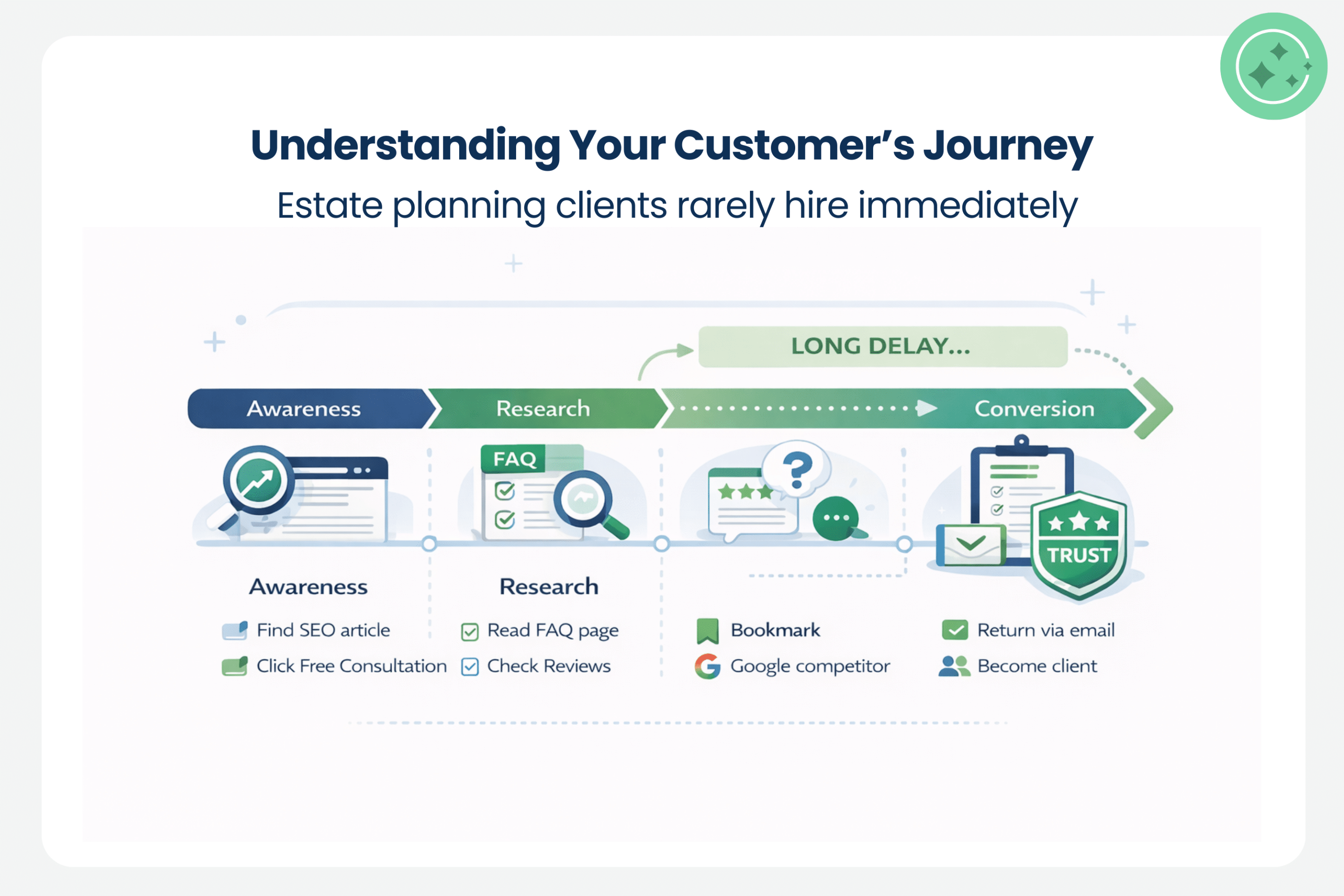
Why You Should Invest in Digital Marketing
With potential estate planning clients actively searching for an estate planning lawyer online, having a robust digital presence is crucial.
Relying on referrals alone won’t accelerate your growth or help you reach your financial goals. Expanding your client sources through digital channels is critical to scaling your practice.
Estate planning law firms face tough competition from DIY platforms like LegalZoom and RocketLawyer. To stand out, you need an effective digital marketing strategy tailored to your practice and local market.
DIY platforms often capture early-stage interest, but firms that remain visible and authoritative during extended research cycles are the ones chosen when clients are ready to move forward.
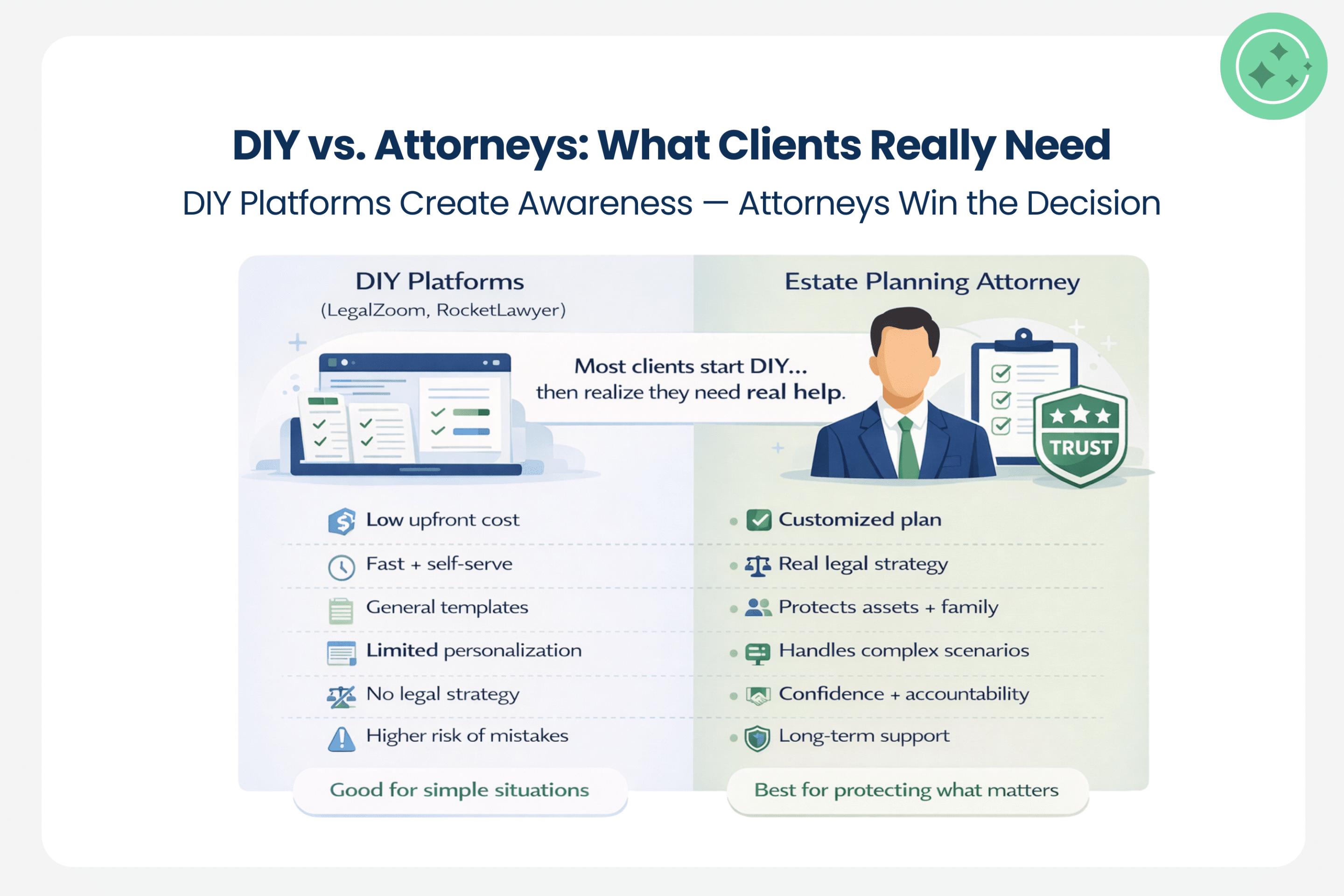
Here are the key benefits of digital marketing for estate planning attorneys:
- Targeted ads that reach ready-to-hire clients
- SEO that drives steady, qualified leads
- Custom materials that build client trust
- Scalable campaigns for lasting growth
For an in-depth look at proven strategies across all channels, explore our marketing guide for law firms.
The Most Effective Estate Planning Marketing Strategies for 2026
To attract more estate planning clients in 2026, you need more than referrals and word-of-mouth. The strategies below are proven to drive consistent growth by improving visibility, building trust, and connecting with high-intent clients.
We’ll cover a mix of digital and traditional tactics—starting with the most impactful: SEO.

1. Boost Visibility with SEO Strategies for Estate Planning Firms
Most estate planning attorneys don’t lose clients because they’re unqualified—they lose them because they’re invisible.
In estate planning, SEO often supports multiple visits over time rather than a single conversion event, making consistency and topical authority more important than short-term ranking gains.
SEO fixes that by helping your firm show up when high-intent prospects search for solutions like “living trust lawyer near me” or “estate planning attorney for seniors.” Here’s how to do it right:
-
On-page SEO: Start with keyword research focused on your practice area. Use keywords naturally in page titles, headers, and throughout your content. Format for readability—Google loves clean, helpful pages.
-
Link Building: Secure backlinks by publishing educational blog posts, guest contributing to finance/legal sites, and collaborating with local organizations.
-
Technical SEO: Ensure your site is mobile-friendly, secure (HTTPS), fast-loading, and easy for search engines to crawl.
Quick SEO Wins for Estate Planning Lawyers
🎯 Target Key Phrases
- Use “near me” queries for high-intent searches
- Include location + practice area in H1s and titles
- Align keywords with your estate planning process
✍️ Write Unique Metadata
- Custom page titles for every service page
- Clear, benefit-driven meta descriptions
- Improve CTR from Google search results
🔗 Build Authoritative Backlinks
- Get links from local organizations
- Collaborate with financial/legal blogs
- Use guest posts to expand reach
🛠️ Fix Technical SEO
- Mobile-friendly, fast-loading site
- Install SSL for secure browsing
- Use clean code and structured data
With these SEO basics in place, your firm will be ready to dominate local search results—which we’ll tackle in the next section.
2. Strengthen Local SEO to Attract Nearby Clients
Local SEO helps your estate planning firm appear in Google searches from high-intent clients in your area.
To improve local rankings and attract more estate planning clients:
Start with:✓ Use location-based keywords
✓ Ensure NAP (Name, Address, Phone) consistency across directories
✓ Collect reviews from satisfied clients on Google
📍 Here is a screenshot of the local pack for “estate planning attorney in Charlotte, NC” to visually demonstrate how firms can stand out in Google search results.
Combine your efforts with a fully optimized Google Business Profile (GBP):
-
Keep info accurate and up to date
-
Add engaging photos of your office and team
-
Post updates and respond to all reviews
Consistent listings and authentic community engagement can dramatically improve visibility and build trust with local prospects.
3. Develop High-Impact Content That Speaks to Client Needs
When it comes to estate planning marketing, content does more than drive SEO—it builds trust, simplifies legal complexity, and helps attract estate planning clients before they even pick up the phone.
To start, invest in high-quality content for law firm websites that both informs your audience and meets search engine standards. A thoughtful marketing strategy begins with understanding what your prospects are searching for. Review our estate planning SEO case study, analyze your best-performing pages, and turn that insight into a clear, data-backed marketing plan.
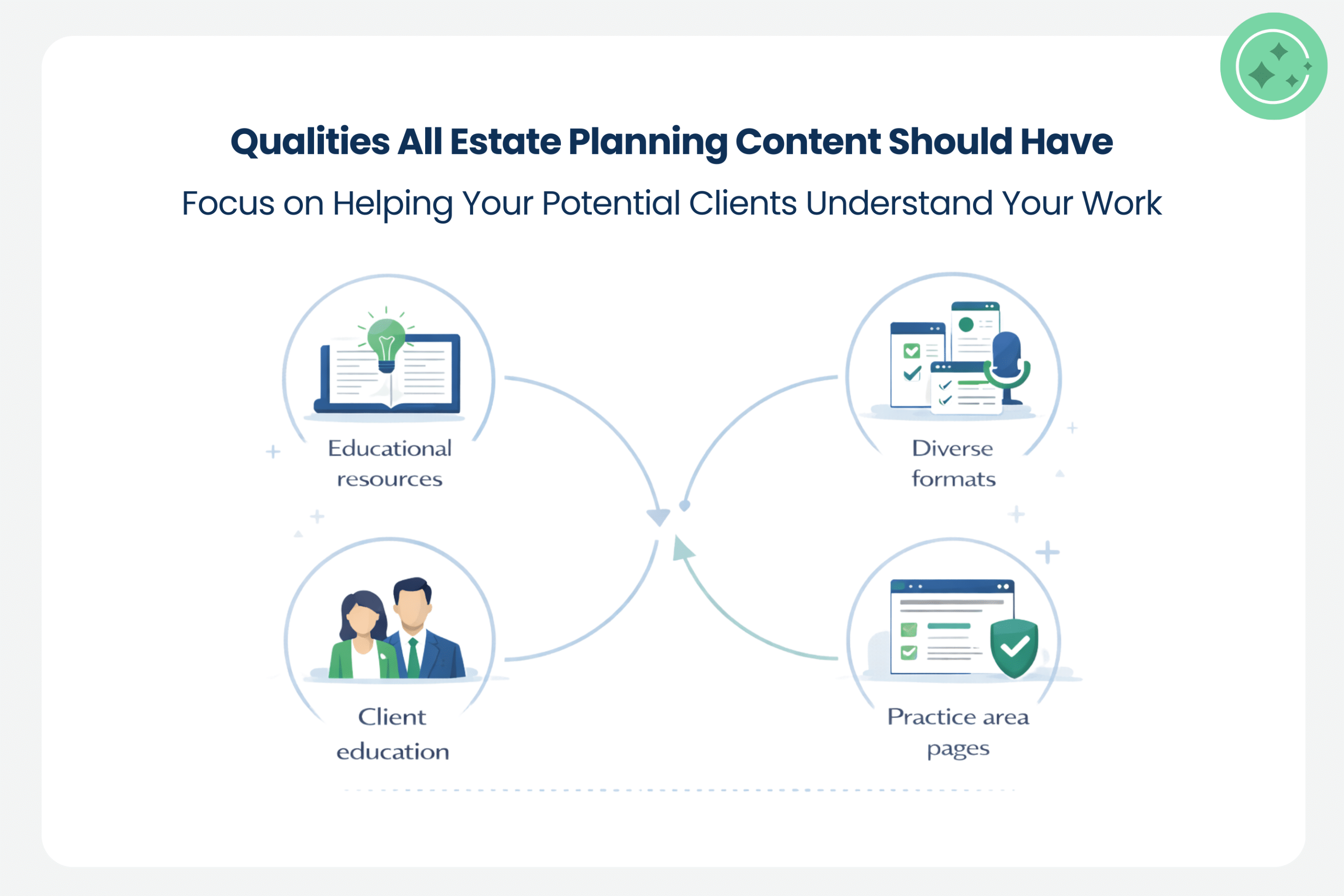
Here’s how to make your content work smarter:
Build Deep Educational Pages
Create in-depth content around each practice area—wills, trusts, probate, and more. Go beyond listing services by walking users through the estate planning process, using step-by-step guides and real client examples.
Embrace Diverse Content Formats
Use a mix of formats to reach clients in meaningful ways:
-
Videos simplify legal ideas and introduce your firm.
-
Webinars or podcasts give your team a voice—literally. See our elder law webinar case study for a real example.
-
Infographics turn complex rules into digestible visuals.
Expand with SEO-Friendly Practice Area Pages
Each service page should answer questions, showcase expertise, and guide visitors toward action. Don’t just explain what you do—explain why it matters.
Add a Dynamic FAQ Section
A dynamic FAQ page helps you:
-
Answer real questions directly.
-
Establish trust by being helpful and transparent.
-
Support SEO with long-tail keywords.
This is where many estate planning attorneys fall short. Fresh, relevant content—updated consistently—can keep you top of mind and top of search results.
4. Maximize ROI with Google Advertising (Search + Local Service Ads)
Done right, Google Ads are one of the fastest ways to attract high-intent clients to your estate planning firm.
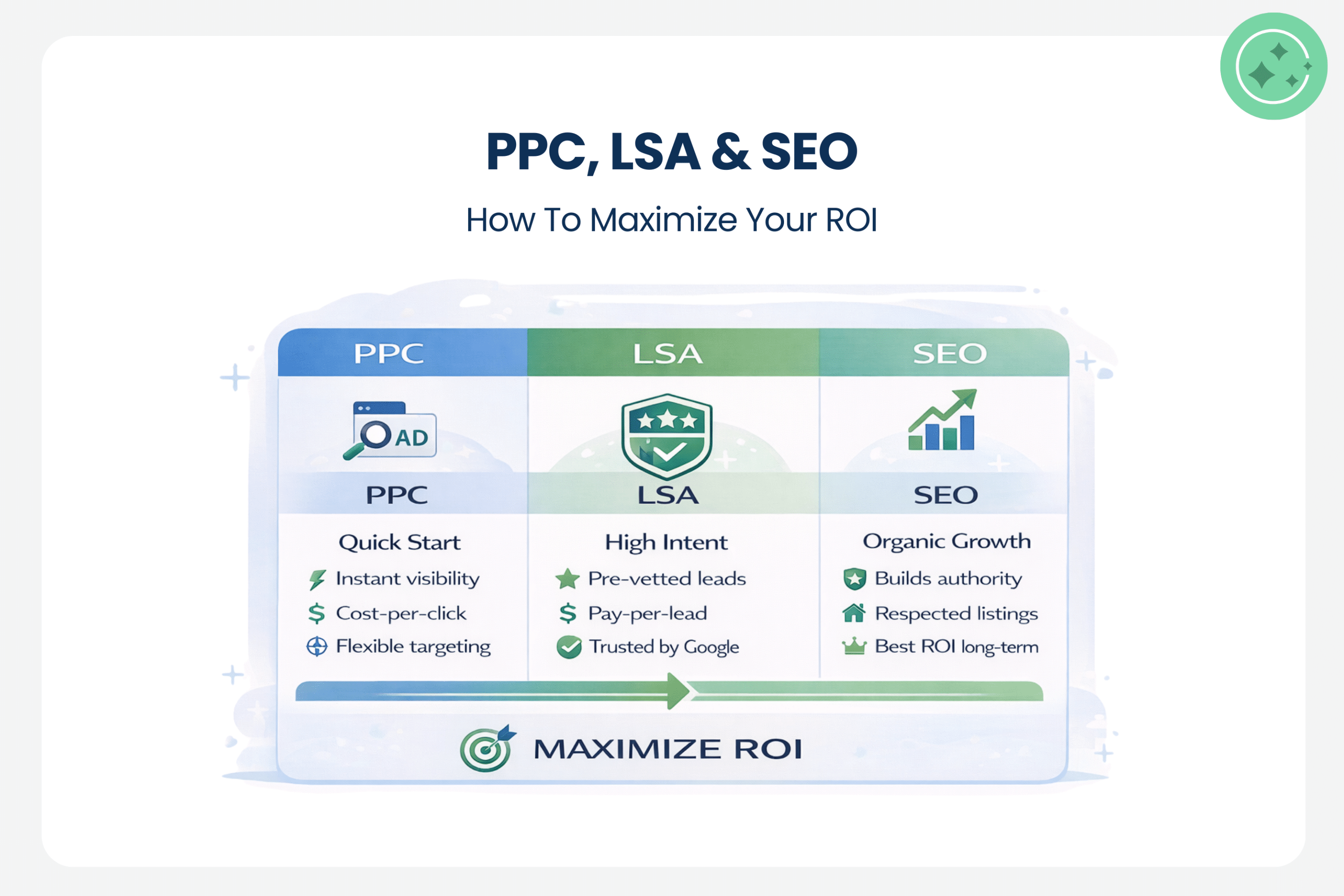
At Constellation Marketing, we’ve managed over $200,000 in ad spend for estate planning attorneys in the past year—consistently delivering profitable returns.
⚡ Real Results: A Washington, D.C., client turned a $4,000 investment into $60,000 in case fees in just 60 days.
“I’ve searched for a long, long time for a marketing firm to work with. Patrick and his team at Constellation Marketing are doing an amazing job. I highly recommend them!”
When building your estate planning marketing strategy, we often recommend a combined approach using two ad types that serve different—but complementary—roles:
Pay-Per-Click (PPC) Ads for Fast Visibility
Google PPC is ideal when you want immediate placement on Google Search. These ads are keyword-targeted and highly customizable, allowing you to appear for terms like “estate planning attorney near me” or “living trust lawyer .”
-
Quick results: Your ads appear at the top of Google shortly after launch.
-
Targeted traffic: Focus your budget on people actively searching for your services.
-
Scalable ROI: One new case can easily cover your ad spend and deliver strong returns.
Local Service Ads (LSAs) for Qualified Leads
LSAs are a pay-per-lead model that often appear even above PPC ads in search results. They’re especially effective for building trust at a glance, thanks to Google’s “Google Screened” badge.
-
Top-of-page placement: Capture attention before users scroll.
-
Only pay for leads: No charge for clicks that don’t convert.
-
Great for estate planning services: These ads help you connect with people who are already searching for help in your specific practice area and location.
5. Optimize Your Website to Drive Rankings and Conversions
A high-performing website isn’t just a bonus—it’s a non-negotiable for estate planning attorneys who want to rank on Google and convert more visitors into clients.
Google favors websites that are fast, secure, and mobile-friendly, while users expect clear navigation and sleek design.
📱 Mobile Optimization Checklist:
- Responsive Design: Your site should look great and function well on all screen sizes.
- Fast Load Speeds: Compress images and streamline code to reduce delays.
- Touch-Friendly Navigation: Buttons and menus should be intuitive and easy to use on mobile.
- Simplified Layout: Keep things clean—no clutter, no confusion.
In our experience, even a beautifully written page will underperform if the site loads slowly or isn’t mobile-optimized.
That’s why regular performance audits and design updates are essential to staying competitive in search and keeping visitors engaged.
6.Boost Conversions with Strategic Reputation Management
Reputation management is critical for attracting high-intent estate planning clients. In an industry built on trust, reviews often carry more weight than your homepage.
Encourage satisfied clients to share their experience by leaving a Google Review. These testimonials not only influence potential clients but also support your local SEO strategy. Even if someone prefers to remain anonymous, you can still feature their feedback on your website or social channels.
💬 Quick Tip: Make it easy—include a review request link in follow-up emails. ➤ How to create a Google review linkA proactive reputation management plan helps you establish authority, increase conversions, and stand out from other estate planning attorneys in your area.
7. Stay Top of Mind with Email Marketing
Email marketing remains one of the most cost-effective ways to attract estate planning clients and build long-term relationships.
A consistent, well-written newsletter—whether focused on financial planning tips, legal updates, or changes in the estate planning process—keeps your firm front and center with past clients, referrals, and warm leads. It’s also a powerful way to nurture people who aren’t ready to hire you today but may be in the future.
Want to get the most out of your efforts? Explore our guide to email marketing for lawyers to learn how strategic campaigns can generate high ROI and automate trust-building.
When done right, email marketing doesn’t just boost visibility—it helps you establish authority and build credibility over time without a massive ad spend.
8. Launch Targeted Social Media Ads to Nurture Future Clients
While not every legal service thrives on social media, estate planning is different. New clients often take time to make decisions—making platforms like Facebook and Instagram ideal for staying top-of-mind.
Well-crafted social ads allow you to:
-
Educate prospects through approachable messaging
-
Stay visible during their research phase
-
Build trust before they ever pick up the phone
Start with campaigns that offer valuable resources—like guides or checklists—rather than hard sells. This long-game approach aligns with how most estate planning clients make decisions.
9. Build Your Brand with Organic Social Media Marketing
Social platforms like Facebook, Instagram, and LinkedIn offer estate planning attorneys a powerful opportunity to build trust and stay top-of-mind with potential clients—without spending a dime on ads.
Organic social media helps you:
-
Humanize your brand with behind-the-scenes posts
-
Educate your audience about the estate planning process
-
Nurture referrals through consistent engagement
Staying active with relevant, thoughtful content positions your firm as approachable and trustworthy.
What Should You Post?
✓ Quick Estate Tips: Break down complex legal concepts in plain English. ✓ Client Success Stories: Share anonymized wins that build trust. ✓ Behind-the-Scenes Content: Introduce your team or show your firm’s personality. ✓ Community Involvement: Highlight your presence at local events or causes.10. Expand Your Reach Through Networking & Professional Referrals
Building authority in the estate planning space doesn’t always start online. Some of the most valuable marketing comes from real-world relationships and peer credibility.
Here are five ways to grow your reputation and referral network:
- 1Write helpful articles & blog posts on relevant estate planning topics.
- 2Participate in legal seminars and conferences.
- 3Host online webinars or in-person workshops to educate your audience on crucial estate planning matters.
- 4Engage with legal questions on online forums, Q&A platforms, or your website.
- 5Provide educational sessions for fellow legal professionals.
Networking is not just about shaking hands—it’s about becoming the person others trust to explain complex legal issues clearly and compassionately. When you position yourself as a resource, referrals follow naturally.
Estate planning marketing progress is not always reflected in immediate consultation volume. Early indicators often include repeat visits, branded searches, content engagement, and review growth — signals that trust is forming long before a client reaches out.
11. Measure What Matters to Maximize Your ROI
Great marketing is driven by data. To understand what’s working—and what needs refining—you need to track the right metrics across every channel.
Here’s how to keep your efforts accountable and results-driven:
📊 Website Analytics
Use tools like Google Analytics to track page views, bounce rates, and conversion actions like consultation requests. These insights show how effectively your site turns visitors into leads.
📣 Social Media Engagement
Look beyond follower counts. Monitor engagement metrics—likes, shares, comments—to gauge content performance and identify what truly resonates with your audience.
📧 Email Marketing Metrics
Track open rates, click-throughs, and unsubscribes to evaluate your campaigns. These numbers reveal whether your messaging is compelling—and if it’s prompting action.
Want a deeper dive? Explore our full guide to email marketing for lawyers.
🎥 Webinar Performance (If Applicable)
If webinars are part of your strategy, measure attendance and follow-up conversions to assess whether they’re generating qualified interest.
Pro Tip: Set up Google Tag Manager and Google Search Console alongside Analytics for a more complete picture of how users interact with your site and content. Data doesn’t just inform decisions—it prevents wasted spend.
Grow Your Estate Planning Firm with Constellation
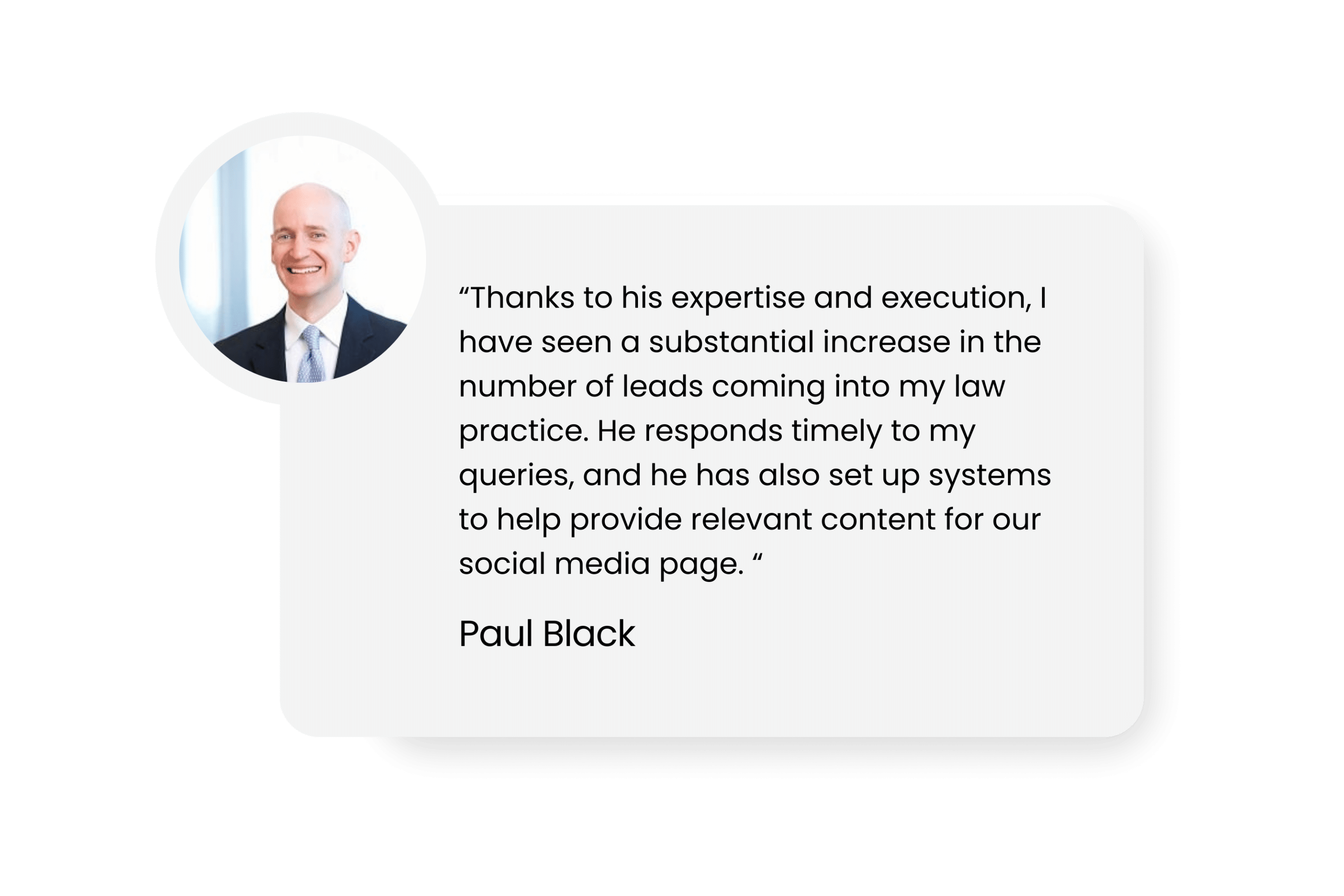
You now have the blueprint for an effective estate planning marketing strategy—SEO, local visibility, content, ads, reviews, and more.
But here’s the truth: Most law firms struggle to execute consistently.
That’s where Constellation Marketing comes in. We help estate planning attorneys like you:
Attract more qualified leads
Build long-term visibility
Get real, measurable ROI
Our team handles the strategy and execution—so you can focus on your clients, not your marketing.
In 2026, estate planning clients are researching more thoroughly while clicking less frequently. Search results, reviews, and educational content now shape decisions before a firm is ever contacted. Firms that invest in consistent visibility and trust-building systems outperform those focused solely on short-term lead volume.
Do You Want To
Consistently Generate More Cases?
Got 15 minutes? Let me review your current metrics and provide a forecast of your potential growth based on our client results.
Schedule a FREE Consultation