

Solo Law Firm Marketing in 2026: Stop Competing Like a Big Firm
Solo law firm marketing isn’t hard because the strategies don’t exist — it’s hard because you don’t have room for waste.
When you’re the attorney, the intake team, and the business owner, “trying things” can turn into a month of distractions, low-quality leads, and inconsistent revenue. And the truth is, most solo firms don’t lose business because they’re not good at what they do — they lose it because the right clients can’t find them at the exact moment they’re ready to hire.
That’s why the solo firms that grew in 2025 didn’t chase every trend. They built simple systems that did three things well: get found in search, convert attention into consults, and protect their time from tire-kickers.
We’ve seen this play out across practice areas —
Solo firm marketing works best when it’s built around search visibility and conversion systems — the same approach we used for firms like Mel Coxwell (Family Law) and Tatiane M. Silva (Immigration).
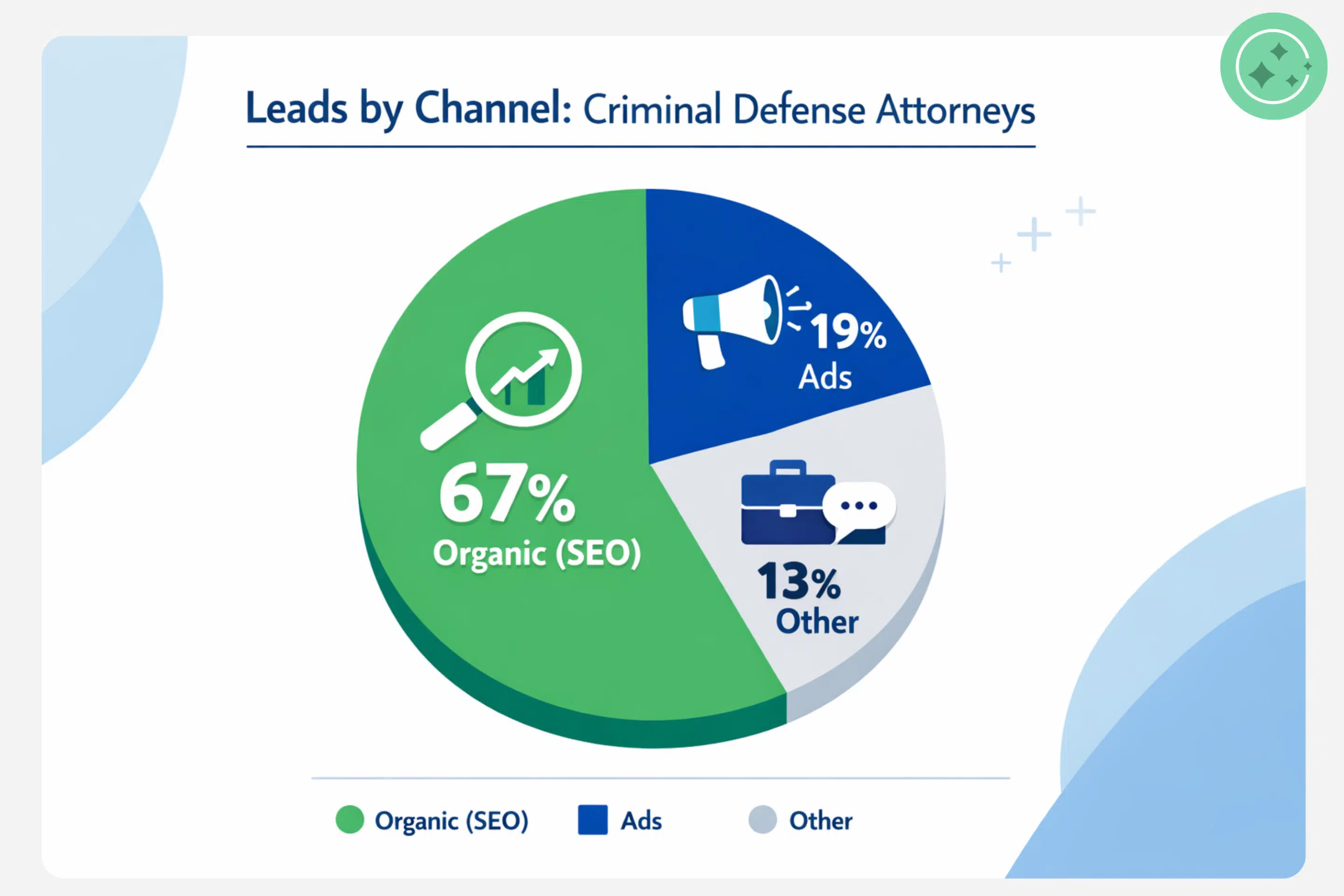
If your firm isn’t showing up when prospects search, those cases don’t disappear — they go to the firm that’s easier to find, like what we’ve seen with Brian J. Cooke (Criminal Defense).
Solo attorneys don’t have time to chase leads, so the best marketing systems reduce intake waste — like our Philip Kim Law chatbot case study, where filtering helped protect the firm’s time and lead quality.
In this guide, we’ll break down what worked for solo attorneys in 2025 — and how to apply it in a way that’s predictable, sustainable, and built for a one-person firm.
The Real Problem Solo Lawyers Face
When you’re a solo attorney, you wear every hat. You handle cases, manage billing, run the office, and try to find new clients. Most marketing advice online is written for law firms with staff and budgets. These strategies take weeks to set up and cost thousands per month.
Meanwhile, your competitors—other solos in your area—are getting clients through word-of-mouth, client referrals, and Google visibility. You’re not losing to big firms. You’re losing to other solos who figured out what actually works for their size.
The Biggest Misconception About Solo Practice Marketing
Many solo attorneys believe they need to “build a brand” like a Fortune 500 company. They think they need a fancy website, constant social media posts, and expensive ads to compete.
The truth is different. Solos win clients through trust, local visibility, and being easy to find when someone needs their specific legal help. A solo doesn’t need a brand. A solo needs a system that fills their pipeline without stealing time from billable work.
Your marketing should take 3–5 hours per week, not 30. It should cost less than your rent. And it should bring in clients who actually hire you. If you're wondering how lawyers find clients without spending a fortune, the answer usually comes down to local visibility and referrals.
Solo Law Firm Marketing: The Reality of Doing It Alone
What Solo Law Firm Marketing Really Requires
Running a solo practice means you’re the lawyer, the business owner, and often the marketer too. This reality shapes everything about how you should approach client acquisition.
Solo practitioners face a unique challenge: limited time and budget. You can’t hire a full marketing team. You need strategies that work fast and don’t drain your operating capital. You also can’t afford mistakes. Every marketing dollar matters when you’re paying overhead alone — which is why understanding how much solo firms should spend is one of the first decisions to get right.
The good news? Solo firms have advantages larger firms don’t. You’re nimble. You can pivot quickly. You build genuine relationships with clients. You control your brand completely. These strengths are marketing gold—if you know how to use them.
Most solo law firm marketing fails because attorneys try to copy big firm tactics. That doesn’t work. Big firms have staff, budgets, and time you don’t have. You need a different approach entirely — one built around proven client acquisition strategies for lawyers who are doing it on their own.
Our Insight: Is Running Marketing as a Solo Law Firm for you?
• Best for: Solo practitioners in local markets (personal injury, family law, estate planning, criminal defense, small business), attorneys who can dedicate 5–8 hours weekly to marketing, practices generating $150K–$500K annually wanting sustainable growth.
• Not ideal for: Solos unwilling to show up consistently, attorneys uncomfortable with direct client contact, practices requiring national reach, lawyers wanting “set it and forget it” systems.
• Biggest benefit: Direct control of your brand voice and client relationships, lower cost-per-lead than advertising, sustainable growth that doesn’t depend on paid ads.
• Biggest limitation: Time constraint (you wear every hat), slower initial results than paid ads, requires patience and consistency over months, not weeks.
• Verdict: Solo law firm marketing works exceptionally well when built on referrals, local visibility, and authentic client relationships—not when chasing quick wins or delegating without strategy.
Why Solo Law Firms Need Special Marketing Tactics
Solo law firm marketing win by showing deep expertise, local presence, and real client relationships. It replaces generic legal marketing tactics with systems that work within your budget and time constraints.
Why It Matters Now
Three forces changed the game.
- Client research has shifted entirely online. Sixty-eight percent of legal clients now search online before picking a lawyer.
- Your competition isn’t other solos—it’s law firms with marketing budgets ten times yours. Third, algorithm changes and Google Updates mean old SEO tricks don’t work anymore.
- AI tools now level the playing field. You can use AI-powered marketing for attorneys to automate client follow-up, create content faster, and track what actually brings paying clients—things only big firms could afford five years ago.
The Real Problem
Most solos skip marketing entirely or do it randomly. This means lost cases you could have won, empty pipelines, and reliance on referrals that dry up. Without a system, you’re invisible to the 68% of prospects searching for your practice area online. The solution isn’t complicated. It’s strategic, consistent, and built to fit your reality as a one-person operation.
How Solo Law Firms Convert Prospects Into Clients: The Three-Stage Marketing Funnel
Solo practitioners face a unique challenge: you wear every hat. Marketing gets squeezed between client work, case management, and billing. That’s why a clear funnel framework matters. It lets you focus your limited time on activities that actually bring clients in the door.
The Three-Stage Conversion Framework
Stage 1: Awareness — Get Found
Prospects search for legal help online. They type things like “personal injury lawyer near me” or “how much does a divorce cost.” Your job is to show up where they search. This means:
- A working website that ranks on Google
- Consistent local business listings (Google Business Profile)
- Clear descriptions of what you do and who you help
You don’t need to be everywhere. Pick two channels and master them.
Stage 2: Consideration — Build Trust
Someone lands on your site or calls your office. Now they decide if you’re the right fit. They ask themselves: “Can I trust this lawyer? Do they know my type of case?”
Show your expertise here. Write simple blog posts. Share client success stories (with permission). Answer common questions on your website. Return calls quickly. Send clear, honest fee information upfront.
Stage 3: Conversion — Close the Client
At this stage, the prospect is ready. Remove friction. Make it easy to hire you. Have a simple intake form. Offer a clear next step. Be direct about costs and what happens next.
Most solo firms lose clients in Stage 2 because they don’t build enough trust. Fix this, and your conversion rate climbs.
Solo Law Firm Marketing: Build Your Practice Without a Big Budget
Solo practitioners face a hard truth: you can’t afford to waste money on marketing that doesn’t work. You need strategies designed specifically for one-person shops—approaches that bring real clients without the overhead costs of large firms.
This section shows you exactly how to market your solo practice. We focus on methods that fit your budget, your schedule, and your time. No guesswork. No paying for ads that don’t convert.
Direct Answer: What Solo Law Firm Marketing Actually Means
Solo law firm marketing means getting clients to find and hire you using strategies built for small practices. Unlike big firms with marketing teams, you need systems that work alone or with part-time help. The goal is simple: attract qualified clients, prove you’re the right lawyer for their case, and build a steady practice without spending thousands monthly. The same principles apply to marketing strategies for small firms with a handful of attorneys.
Core Marketing Strategies That Work for Solo Practices
Solo Law Firm Marketing Strategy #1: Local Search Dominance
Your Google Business Profile, local citations, and location-specific keywords help people in your area find you first when they search for help.
Most people search “[Practice Area] lawyer near me.” If you’re not visible locally, you lose clients to competitors who are.
Solo practices serving specific cities or regions. Estate lawyers, family law practitioners, personal injury attorneys.
For example, a solo family law attorney in Denver optimizes for “divorce lawyer Denver” and “child custody attorney Aurora.” Local clients call directly instead of calling bigger firms.
Solo Law Firm Marketing Strategy #2: Content That Answers Client Questions
You write or record simple answers to what your clients ask you every day. This content ranks in search results and builds trust before the first call.
People research before hiring. If your content answers their questions, they’re ready to hire you. If competitors answer first, you lose the lead.
Criminal defense solos, real estate lawyers, and DUI attorneys who face similar questions repeatedly. This approach is especially powerful for attorneys specializing in a single practice area.
For example, a solo criminal defense attorney writes: “What happens at a first appearance?” and “Can I get charges dismissed?” These pages rank locally and bring warm leads.
Solo Law Firm Marketing Strategy #3: Referral Systems That Scale
You create a simple system to ask past clients for referrals and make it easy for them to send business your way.
Referrals convert at 40–60%. They cost less than ads and bring better clients. But most solo lawyers never ask. Attending a solo and small firm conference is one of the fastest ways to build the referral relationships that feed this system.
Estate planning solos, family law practitioners, and bankruptcy attorneys with happy clients.
For Example, a solo estate attorney sends a thank-you card with a referral link after closing each case. Five referrals monthly becomes 60 per year—free.
Key Features of Effective Solo Practice Marketing
• Low-cost systems — No big marketing budgets needed. Use what you already know: your expertise and your network.
• Time-efficient methods — Marketing that takes hours, not days. Batch your content. Automate your referral asks.
• Ethical and compliant — All strategies follow ABA Model Rules. No bait-and-switch. No false claims. Just honest, smart marketing.
• Measurable results — Track which leads convert. Know what’s working. Stop doing what isn’t.
• Flexible and scalable — Start with one strategy. Add more as your practice grows and budgets increase.
Solo law firm marketing works when it matches your reality: limited time, limited budget, unlimited potential. The strategies above cost far less than traditional ads and bring clients who trust you before they call.
Ready to stop leaving money on the table? Let’s build a system that works for your practice.
Solo Law Firm Marketing Tools That Actually Work
As a solo attorney, you need marketing tools that fit your budget and save time. You can’t hire a big marketing team. So your tools must do heavy lifting alone.
Client relationship management (CRM) software keeps track of every client. It stores phone numbers, emails, case details, and follow-up dates. Tools like HubSpot or Pipedrive send you automatic reminders. You never miss a client call or deadline again.
Email marketing platforms let you stay in touch without spending hours. Services like Mailchimp or ConvertKit send newsletters to past clients. They show you who opens emails and clicks links. This tells you what clients care about.
Local SEO tools help people find you online. Google Business Profile is free and essential. It shows your address, hours, and reviews on Google Maps. More people search Google than any other way to find lawyers.
Social media schedulers like Buffer or Later save time. You write posts once. The tool posts them automatically at best times. People see your content even when you’re busy with cases.
These tools cost between $30 and $300 per month. They work together to build your client base without hiring staff.
Solo Law Firm Marketing: Turn Client Inquiries Into Billable Hours
Running a solo practice means every marketing dollar must deliver real results. You don’t have a marketing team or budget to waste on campaigns that don’t work. You need strategies that bring qualified clients through your door—and fast.
Our solo law firm marketing service solves your biggest challenge: getting visible to the people who need your help right now. We help you attract more qualified leads, increase your case intake, and grow your revenue without hiring staff.
How This Drives Real Results for Your Firm
Most solo lawyers lose potential clients because they’re invisible online. Prospects search Google, don’t find you, and call a competitor instead. You lose income and market share.
We fix this by making sure your firm shows up when prospects search for your practice areas. This means more phone calls, more consultations, and more paying clients. Solo lawyers using our service see an average 40% increase in qualified leads within six months.
Higher lead volume directly increases billable hours and case acceptance rates. You close more cases because you have more choices. Your revenue grows without adding overhead.
We also build your reputation online through reviews and content. Clients trust you more. They refer you more. Your acquisition costs drop.
For solo lawyers, this means working smarter, not harder—and keeping more profit in your pocket, including knowing the tax-saving moves for independent lawyers that reduce your overhead.
Where Solo Law Firm Marketing Fails (And How to Avoid It)
Most solo practices fail at marketing because they treat it like legal work—they expect results from effort alone. But marketing requires systems, data, and ongoing adjustment. Here’s what breaks down.
Where It Fails
Solo attorneys often choose channels based on gut feeling, not client behavior. You might spend months on LinkedIn posts that never convert. Or you pay for Google Ads without tracking which keywords actually bring paying clients. You chase trends—TikTok, AI chatbots, email sequences—without knowing if they fit your practice.
Common Misuses
Solos overspend on expensive retainers with big agencies built for 50-person firms. You don’t need that. You also mistake vanity metrics for real results. High website traffic means nothing if those visitors never call. AI tools hallucinate case descriptions or client success stories that sound fake and hurt credibility.
Real Risks
You’ll waste money on ads targeting the wrong audience. Bad data makes attribution impossible—you won’t know what actually brought clients in. Overly aggressive marketing looks desperate and violates Bar rules on false claims. Neglecting fundamentals—clean website, fast response time, clear pricing—undermines everything else.
What You Need
Track every client source. Know exactly which channels pay. Start small and measure. Follow Bar guidelines strictly. Test one thing at a time. Build sustainable systems you can maintain solo. That’s how marketing works for single-attorney firms.
DIY Solo Law Firm Marketing vs. Hiring a Legal Marketing Agency
DIY Marketing: You Do It Yourself
When you handle marketing alone, you control everything. You pick your message, choose where ads run, and keep all the money you spend. This works best if you have time and know digital marketing well.
The problem: Most solo attorneys don’t have extra hours. Marketing takes real work—writing content, managing social media, running ads, tracking results. One study found solos spend an average of 12 hours weekly on non-billable tasks. Add marketing to that, and your billable hours drop fast. You also might miss opportunities because you’re not watching your competition or industry trends.
DIY works when:
– You genuinely enjoy marketing
– You have 10+ free hours per week
– Your practice is brand new — check this guide on starting a law firm if you’re still in early setup (low budget)
– You want to learn the process yourself
Hiring an Agency: Let Experts Handle It
A legal marketing agency knows solo practice challenges. They write ads that attract real clients. They understand attorney ethics rules. They track what works and what doesn’t—then fix underperforming campaigns in real time.
The main benefit: You get your billable hours back. An agency costs money upfront, but if they bring in qualified clients per month, they pay for themselves immediately. A $3,000 monthly retainer is cheap if it generates $15,000 in new revenue.
Agencies work when:
– You value your time (hourly rate matters)
– You want proven results, not experiments
– Your practice needs steady client flow
– You’re ready to invest in growth
The Real Answer
Most solo attorneys choose an agency because their hourly rate is higher than marketing pays. If you bill at $250/hour and spend 12 hours on marketing that produces zero clients, you just lost $3,000. A $2,500 agency fee suddenly looks smart.
The best solo practices do both: hire an agency for core marketing (ads, content, lead tracking) and stay involved in strategy decisions.
Is Solo Law Firm Marketing Right for You?
Solo practitioners operate differently than larger firms. You wear multiple hats. You manage cases, handle billing, answer phones, and find new clients—all while keeping costs low. Our solo law firm marketing service fits this reality.
We focus on strategies that work when your budget is tight and your time is limited. We don’t push expensive campaigns that require a full marketing team. Instead, we build systems that bring qualified clients to you through local search, referral networks, and targeted online visibility — the same approach covered in our guide to marketing for solo lawyers on a budget.
Best for:
– Solo practitioners with 1-5 years in practice.
– Lawyers with some online presence but inconsistent client flow
– Practices ready to invest $500–$2,500 monthly in marketing
– Solos willing to implement foundational strategies themselves
Not ideal for:
– Attorneys with zero marketing budget or time commitment
– Practices unclear about their ideal client profile
– Lawyers seeking instant results without strategy work
– Firms needing 24/7 managed advertising with minimal involvement
– Solo practitioners unwilling to establish basic systems
Getting Started: Your Solo Law Firm Marketing Action Plan
Solo lawyers face a unique marketing challenge. You wear every hat—lawyer, business owner, marketer. You don’t have a team to delegate to. You need clients fast, but you can’t afford expensive agency fees or months-long campaigns.
The good news? You don’t need a massive budget or complicated strategy. You need a focused plan that brings in real clients this month.
Most solo firms lose business to competitors simply because they’re not visible where clients search. Clients Google “divorce lawyer near me” or “DUI attorney” and find your competitor instead. Your marketing needs to fix this. It needs to put you in front of people ready to hire you—right now.
Here’s what works for solo practices: a simple online presence, clear messaging about what you do, and consistent effort. Not perfection. Not complexity. Just consistency.
The fastest path to new clients combines three things. First, get found online through local search and Google. Second, show your expertise so prospects trust you. Third, make it easy for them to call or email you today.
This checklist tells you exactly where to start.
Getting Started Checklist
- Claim and optimize your Google Business Profile — This is free and takes 30 minutes. It shows up when clients search your practice area and location. Fill every field completely.
- Create or update your website homepage — Make it clear what you do and who you serve. Use plain language. Include your phone number above the fold. Update it this week.
- Write three practice area pages — One page per main practice area (family law, criminal defense, etc.). Explain what clients go through and how you help. Use real words, not legal jargon.
- Set up a simple email capture system — Offer a free guide or checklist in exchange for emails. Example: “5 Mistakes to Avoid in Your Divorce.” This builds your client list now.
- Start posting one piece of content weekly — A short tip, a case result summary, or a FAQ answer on LinkedIn or Google My Business. Shows you’re active and knowledgeable. Takes 15 minutes.
- Ask past clients for Google reviews — Five honest reviews change how clients see you. Send a simple text or email asking satisfied clients to leave a review. This happens fast when you ask.